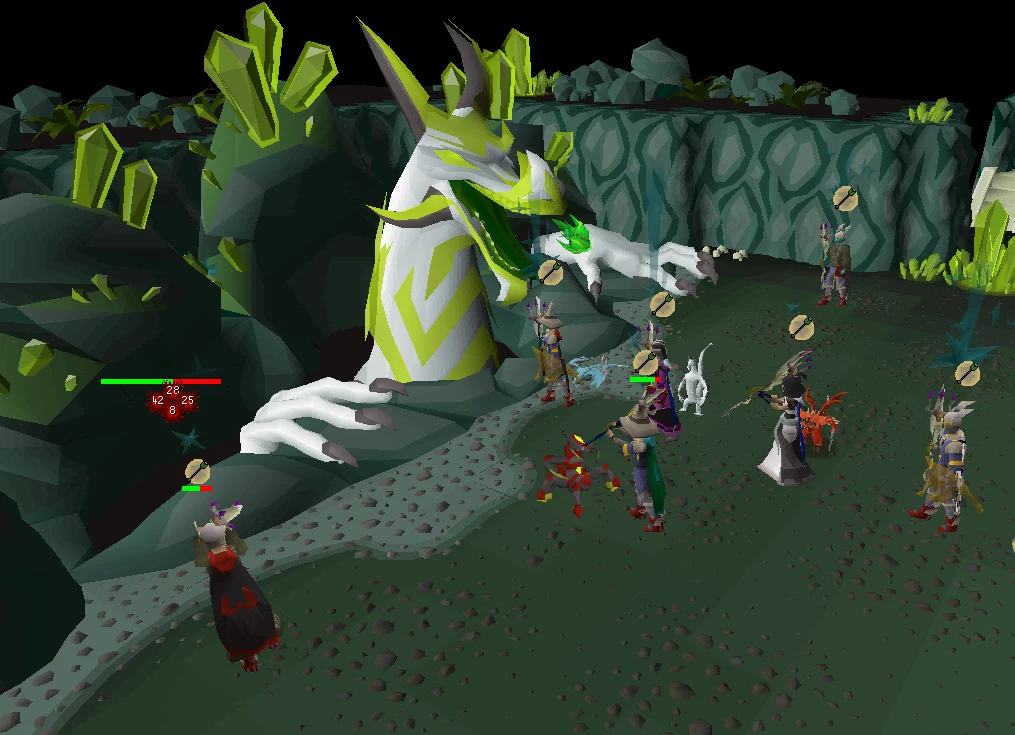


OSRS Demonic Pacts League Guide: Dates, Regions, Tasks, Pacts and Rewards
Player-focused overview of OSRS’s sixth League, Demonic Pacts: schedule, Varlamore start, region unlocks, Ironman rules, task progression, drop and minigame multipliers, finished-item drops, cosmetics, and trophies—grounded in what the mode actually changed.
The Short Answer
Demonic Pacts League was Old School RuneScape’s sixth League. It ran for eight weeks from 15 April 2026 (11:45 AM BST) to 11 June 2026, themed around Yama and his pacts. Every member account could play on dedicated League worlds with progress fully separate from the main game.
Everyone started as an Ironman in Varlamore (from Yama’s Lair into Civitas illa Fortis). Misthalin was completely inaccessible. You unlocked Karamja first after 80 tasks, then up to three more regions at 200, 300, and 450 tasks. Base XP was 5×, eligible drop rates started at 2× after the first relic unlock path, minigame currencies were heavily boosted, run energy did not deplete, and combat masteries returned as pacts for less linear power progression.
What Demonic Pacts League Was
Like earlier Leagues, Demonic Pacts was a timed alternate ruleset: accelerated progression, region locks, task-driven unlocks, and powerful passive choices that reshape how you train and PvM. The name was teased at the New Game+ Showcase 2026 on 8 January 2026, with more detail at the Winter Summit 2026.
- Sixth OSRS League overall
- Yama / demonic pacts theme
- Membership required; dedicated League worlds
- Progress entirely separate from the main game
- All players were Ironmen
- Sailing was not enabled, and main-game content released during the League was not added mid-event
Pets earned in previous Leagues were automatically unlocked here. Pet transmogs earned during Demonic Pacts were set to unlock automatically in future Leagues—one of the cleaner long-term incentives to engage with the cosmetics and collection side.
Start Conditions and Quality-of-Life Rules
The opening setup mattered more than in some past Leagues because the map start was not the usual Misthalin on-ramp.
Spawn, skills, and baseline multipliers
- Start location: Yama’s Lair with an exit to Civitas illa Fortis; locked to Varlamore at the beginning
- Misthalin: fully inaccessible for the entire League
- Base XP rate: 5× (could rise further through relic tiers)
- Starting skills called out in the ruleset: level 3 Herblore and level 5 Runecraft
- Eligible item drop rates: 2× multiplier after unlocking the first relic path, rising to 5× at the fourth relic tier
- Minigame points / related currencies: 4× at tier 1 relic choice, 8× at tier 4
- Run energy: never depleted naturally
- Farming ticks: every 1 minute instead of every 5 minutes
Always-on convenience changes
- Zanaris and the Abyssal Area were available from all regions
- Most shop stock did not deplete; several shops had expanded stock (examples included anti-dragon and elemental shields in all Slayer equipment shops, early melee/halberd stock in Fortis, hunter tools in Fortis general stores, knives in Tal Teklan, hunters’ crossbow on the Sunset Coast charter shop, and wrath talismans in the East Ardougne general store)
- All clue scrolls dropped as scroll boxes, with progress saved between clues
- Player-owned house purchases were located in Aldarin
- Leagues Tutor in Yama’s Lair sold max capes (99 Sailing not required because Sailing was disabled)
- Starter/utility items available from the Leagues Tutor included a Dramen staff, spade, impling jar, and two strange devices
- Impling spawns were increased (including rarer implings); dragon implings dropped reduced dragon bones
- League Yama’s Lair stepping stones allowed Agility training from level 1
- Some low-level enemies such as cows and hill giants respawned more often
- Forestry events were 3× more likely to spawn
- Slayer Masters used main-game task lists but only within unlocked regions
Regions and Unlock Thresholds
Region planning was the backbone of Demonic Pacts. Everyone shared the same first unlock, then chose a limited number of additional areas.
| Unlock | Tasks required | Notes |
|---|---|---|
| Starting region | 0 | Varlamore only; Misthalin unavailable |
| First unlock | 80 League tasks | Karamja for all players |
| Second unlock | 200 tasks | Choose an additional region |
| Third unlock | 300 tasks | Choose an additional region |
| Fourth unlock | 450 tasks | Choose an additional region (up to three beyond Karamja) |
- Unlock
- Starting region
- Tasks required
- 0
- Notes
- Varlamore only; Misthalin unavailable
- Unlock
- First unlock
- Tasks required
- 80 League tasks
- Notes
- Karamja for all players
- Unlock
- Second unlock
- Tasks required
- 200 tasks
- Notes
- Choose an additional region
- Unlock
- Third unlock
- Tasks required
- 300 tasks
- Notes
- Choose an additional region
- Unlock
- Fourth unlock
- Tasks required
- 450 tasks
- Notes
- Choose an additional region (up to three beyond Karamja)
Every area offered roughly the same total task points, which reduced the old “one region is obviously dead” problem and pushed planning toward bosses, skilling methods, and relic synergy instead of raw point starvation.
Example Varlamore-flavoured tasks
Area tasks mixed exploration, skilling, and kills. Examples called out for this League included travelling on the Quetzal Transport System, completing 10 Hunters’ Rumours, defeating Amoxliatl, stealing 25 valuables, petting a xolo in Civitas, crying near a child, and milking a buffalo.
Example general tasks
Universal tasks could be finished in many places—simple actions such as burying bones, chopping logs, equipping a maple shortbow, or defeating a guard. Early point banking was intentionally accessible so players could rush the Karamja unlock without perfect optimization on day one.
Tasks, Points, and How You Actually Progressed
Completing League tasks was the main progression loop. Tasks awarded League Points and gated relics/rewards at point thresholds. Difficulties ran across five bands: Easy, Medium, Hard, Elite, and Master. Some tasks were region-locked; others were general.
- Clear easy general tasks immediately to build momentum
- Stack Varlamore area tasks while gathering starter gear and food routes
- Hit 80 tasks for mandatory Karamja
- Pick later regions around the bosses and skilling loops your pacts support
- Spend points on cosmetics/trophies after your power progression is online
Pacts, Relics, and Combat Masteries
Combat masteries returned in pact form, described as a less linear progression system than a single forced path. Relics still defined the big identity swings—gathering style, bossing convenience, clue throughput, and similar league-defining passives.
Daily reveals before launch highlighted early options and features such as Endless Harvest, Barbarian Gathering, and Abundance (Tier 1 gathering-oriented choices framed around the Varlamore start), plus named systems/relics including Minion, Culling Spree, Evil Eye, Woodsman, and Conniving Clues. Echo content was also part of the preview cadence, including Echo Amoxliatl and a returning Thermonuclear smoke devil echo with League-specific reward framing.
Echo bosses and raid rules worth knowing
- Echo bosses returned from Raging Echoes League (some with different rewards/bosses); rewards were guaranteed if you exceeded 2× the drop rate
- CoX Challenge Mode, ToB Hard Mode, and ToA 500+ had significantly buffed drop rates and difficulty
- Those harder raid modes used +25% damage taken from all sources, +25% enemy Defence, and +50% enemy Hitpoints
- ToA and ToB gave uniques to all raiders if any raider rolled one
- Twisted bow, Scythe of Vitur, and Tumeken’s shadow were available from all three raids in this ruleset
- Scythe of Vitur charged with blood runes only
- Arcane and dexterous prayer scrolls had much lower weighting in CoX CM (5) than in normal CoX (20)
Drop Rules That Changed Gear Progression
Demonic Pacts heavily reduced multi-region component hell. If an item normally dropped as pieces that needed several areas to assemble, the League often dropped the finished product instead.
| Source | League drop instead of components |
|---|---|
| Grotesque Guardians | Guardian boots (not black tourmaline core) |
| Araxxor | Amulet of rancour (not araxyte fang) |
| Alchemical Hydra | Dragon hunter lance, ferocious gloves, and bonecrusher necklace |
| Cerberus | Eternal boots (not eternal crystal) |
| Phantom Muspah | Ancient sceptre (not ancient icon) |
| Zulrah | Uncharged toxic trident (not magic fang) |
| The Leviathan | Venator ring (not venator vestige) |
| The Whisperer | Bellator ring (not bellator vestige) |
| Vardorvis | Ultor ring (not ultor vestige) |
| Duke Sucellus | Magus ring (not magus vestige) |
| Fortis Colosseum | Echo boots (not echo crystal) |
| Theatre of Blood | Avernic defender (not avernic hilt) |
| Chambers of Xeric | Kodai wand (not kodai insignia) |
| Doom of Mokhaiotl | Confliction gauntlets (not mokhaiotl cloth) |
| The Forgotten Four | All Soulreaper axe pieces from every DT2 boss |
| Brimstone chest | Completed dragon hasta |
- Source
- Grotesque Guardians
- League drop instead of components
- Guardian boots (not black tourmaline core)
- Source
- Araxxor
- League drop instead of components
- Amulet of rancour (not araxyte fang)
- Source
- Alchemical Hydra
- League drop instead of components
- Dragon hunter lance, ferocious gloves, and bonecrusher necklace
- Source
- Cerberus
- League drop instead of components
- Eternal boots (not eternal crystal)
- Source
- Phantom Muspah
- League drop instead of components
- Ancient sceptre (not ancient icon)
- Source
- Zulrah
- League drop instead of components
- Uncharged toxic trident (not magic fang)
- Source
- The Leviathan
- League drop instead of components
- Venator ring (not venator vestige)
- Source
- The Whisperer
- League drop instead of components
- Bellator ring (not bellator vestige)
- Source
- Vardorvis
- League drop instead of components
- Ultor ring (not ultor vestige)
- Source
- Duke Sucellus
- League drop instead of components
- Magus ring (not magus vestige)
- Source
- Fortis Colosseum
- League drop instead of components
- Echo boots (not echo crystal)
- Source
- Theatre of Blood
- League drop instead of components
- Avernic defender (not avernic hilt)
- Source
- Chambers of Xeric
- League drop instead of components
- Kodai wand (not kodai insignia)
- Source
- Doom of Mokhaiotl
- League drop instead of components
- Confliction gauntlets (not mokhaiotl cloth)
- Source
- The Forgotten Four
- League drop instead of components
- All Soulreaper axe pieces from every DT2 boss
- Source
- Brimstone chest
- League drop instead of components
- Completed dragon hasta
Other notable PvM shortcuts
- Wilderness bosses did not require the Wilderness Medium diary
- Zulrah had no damage cap
- Nihil shards from Nex dropped in increased quantity
- Vorkath dropped Ava’s assembler directly instead of Vorkath’s head
- Dizana’s quiver had ammo saving enabled by default
Content released since the previous League was in the pool where regions allowed, including Royal Titans (with twinflame staff and Mystic Vigour/Deadeye prayers), Yama (including Oathplate, soulflame horn, and surge potions), and Varlamore Part 3 systems such as Doom of Mokhaiotl, Gemstone Crab, Arkan blade, Vale Totems, Tal Teklan, Auburnvale, and the Custodia Pass Slayer Dungeon (including the antler guard). Summer Sweep-Up combat changes also applied inside the mode. Exact boss numbers still belong on the Wiki encounter pages if you are theorycrafting a niche setup.
Minigame and Currency Multipliers
After choosing the tier 1 relic, listed minigame rewards/currencies ran at 4×; at tier 4 this became 8×. Activities called out as affected included Mastering Mixology, Vale Totems offerings, Brimhaven Agility Arena vouchers (shop vouchers, not XP tickets), Tai Bwo Wannai Cleanup favour/gout tuber chance, Mahogany Homes reward shop, marks of grace from rooftops, Mining Guild unidentified minerals, Motherlode gold nuggets, Pest Control points, Rogues’ Den safe cracking chance, Shooting Stars stardust, Warriors’ Guild tokens, Giants’ Foundry, Guardians of the Rift points and abyssal pearls, Mage Training Arena points, Barbarian Assault honour points and queen kills, Castle Wars tickets, chompy killcount, Molch pearls, Tithe Farm, Hallowed marks, and Trouble Brewing.
Rewards, Cosmetics, and Trophy Ranks
League Points could redeem rewards from past Leagues as well as Demonic Pacts’ own cosmetics. Unique Demonic Pacts unlocks included tiered clothing sets, a banner, Home Teleport animation override, demonic throne override styled after Yama’s throne, thrall-to-imp override, trident cosmetic overrides, Iban’s staff/Iban Blast override, soul reaper axe override inspired by Yama’s axe, Slayer helmet overrides matching oathplate/radiant oathplate, demon butler override, and a new red skin colour.
| Points | Reward |
|---|---|
| 500 | Demonic Pacts banner |
| 1,000 | Tier 1 League clothing set |
| 1,000 | Home Teleport animation override |
| 2,000 | Iban’s staff + Iban Blast cosmetic override |
| 3,000 | Demonic throne override |
| 3,000 | Oathplate-style Slayer helmet overrides |
| 3,000 | New red skin colour |
| 4,000 | Demon butler cosmetic override |
| 4,500 | Trident of the seas/swamp cosmetic overrides |
| 5,000 | Tier 2 League clothing set |
| 8,000 | Thralls appear as imps |
| 10,000 | Soul reaper axe cosmetic override |
| 20,000 | Tier 3 League clothing set |
- Points
- 500
- Reward
- Demonic Pacts banner
- Points
- 1,000
- Reward
- Tier 1 League clothing set
- Points
- 1,000
- Reward
- Home Teleport animation override
- Points
- 2,000
- Reward
- Iban’s staff + Iban Blast cosmetic override
- Points
- 3,000
- Reward
- Demonic throne override
- Points
- 3,000
- Reward
- Oathplate-style Slayer helmet overrides
- Points
- 3,000
- Reward
- New red skin colour
- Points
- 4,000
- Reward
- Demon butler cosmetic override
- Points
- 4,500
- Reward
- Trident of the seas/swamp cosmetic overrides
- Points
- 5,000
- Reward
- Tier 2 League clothing set
- Points
- 8,000
- Reward
- Thralls appear as imps
- Points
- 10,000
- Reward
- Soul reaper axe cosmetic override
- Points
- 20,000
- Reward
- Tier 3 League clothing set
Rank trophies (free, static thresholds)
Participation trophies were claimable for free based on points earned. They were untradeable, included a unique emote, and used fixed thresholds rather than relative placement. Bronze to Mithril trophies were shield-slot items; Adamant to Dragon were two-handed.
| Points | Trophy tier (rank ladder) |
|---|---|
| 2,000 | Entry trophy threshold |
| 4,000 | Next trophy threshold |
| 10,000 | Next trophy threshold |
| 22,000 | Next trophy threshold |
| 32,000 | Next trophy threshold |
| 47,500 | Next trophy threshold |
| 65,000 | Top trophy threshold listed |
- Points
- 2,000
- Trophy tier (rank ladder)
- Entry trophy threshold
- Points
- 4,000
- Trophy tier (rank ladder)
- Next trophy threshold
- Points
- 10,000
- Trophy tier (rank ladder)
- Next trophy threshold
- Points
- 22,000
- Trophy tier (rank ladder)
- Next trophy threshold
- Points
- 32,000
- Trophy tier (rank ladder)
- Next trophy threshold
- Points
- 47,500
- Trophy tier (rank ladder)
- Next trophy threshold
- Points
- 65,000
- Trophy tier (rank ladder)
- Top trophy threshold listed
Because thresholds were static, your “rank look” depended on total points, not on beating the world. That made late-league point targets easier to plan around casual vs grind-heavy schedules.
Practical Checklist Before You Treat This as History or a Future Template
- Confirm whether you care about trophies, past-League reward shop spends, or just the temporary power fantasy
- Remember the open: Varlamore first, Misthalin never, Karamja at 80 tasks
- Plan region picks around finished-item bosses and boosted minigames, not only raw combat style preference
- Use pact/relic choices to decide if you are a gatherer-first, boss-teleport, clue-spam, or echo-hunting account
- Bank easy general tasks early; do not hoard trivial points
- Track static trophy thresholds if cosmetics are the real endgame
- After the League ends, separate main-game goals again—League multipliers do not carry to normal worlds
If you are returning to the modern map after playing this mode, pair this with the broader world context in our New Era guide and keep main-game boss execution references like the Yama guide distinct from League-only drop rules.
FAQ
When did Demonic Pacts League start and end?
It started on 15 April 2026 at 11:45 AM BST and ended on 11 June 2026 after an eight-week run.
Did everyone start in Misthalin?
No. Players started in Varlamore via Yama’s Lair/Civitas illa Fortis. Misthalin was completely inaccessible.
How many regions could you unlock?
Varlamore at the start, Karamja as the mandatory first unlock at 80 tasks, then up to three additional regions at 200, 300, and 450 tasks.
Was Sailing in the League?
No. Sailing was not included, and 99 Sailing was not required for the League max cape sold by the Leagues Tutor.
What were the baseline XP and drop multipliers?
Base XP was 5× and could improve through relics. Eligible drops were 2× after the first relic unlock breakpoint and 5× at the fourth relic tier. Listed minigame currencies were 4× at tier 1 and 8× at tier 4.
Could you play as a normal (non-Ironman) account inside the League?
No. As with previous Leagues, all players were Ironmen for the mode.
Did League points buy only new cosmetics?
No. Points could redeem rewards from prior Leagues as well as Demonic Pacts’ unique cosmetics. Rank trophies were separate free claims based on static point totals.
Is this the same as Leagues II: Equilibrium?
No. Naming confusions happen a lot in older discussions—see our clarification piece on Leagues II: Equilibrium. Demonic Pacts was the sixth OSRS League with its own Yama-themed ruleset.
Related Guides
Bottom Line
Demonic Pacts League was the Yama-themed sixth League: eight weeks, full Ironman, Varlamore-first, Misthalin-off-the-table, and progression built on tasks, four region unlocks after the start, pacts/relics, and aggressive QoL around finished uniques, clues, farming, and minigame currencies.
If you are reading this after the mode ended, use it as a clean historical rules snapshot and cosmetics/trophy reference. If you are using it to understand how modern Leagues are shaped, the important design takeaways are the shared first unlock, static trophy thresholds, finished-item boss drops, and pact-style combat progression—not main-game grind expectations.
Bils Services has been helping players with hand-done OSRS work since 2018. When the temporary rules fade and you are back on a normal account profile, keep your goals split cleanly between League souvenirs and long-term main-game progress.
Demonic Pacts League rules were temporary and separate from the main game. Always verify live relic text, task lists, and reward claims on the OSRS Wiki or in-game interfaces when exact numbers matter.
Need a trusted team? Bils Services
Enjoyed the guide?
Drop a like — it helps other Adventurers find the good stuff.
Community
Comments
Silence in the hall…
Be the first Adventurer to leave a mark.
Join the thread
Add a comment
Tips, drops, or “this carried my account” — keep it useful.
bilsservices · bils services · bilsservices.com